
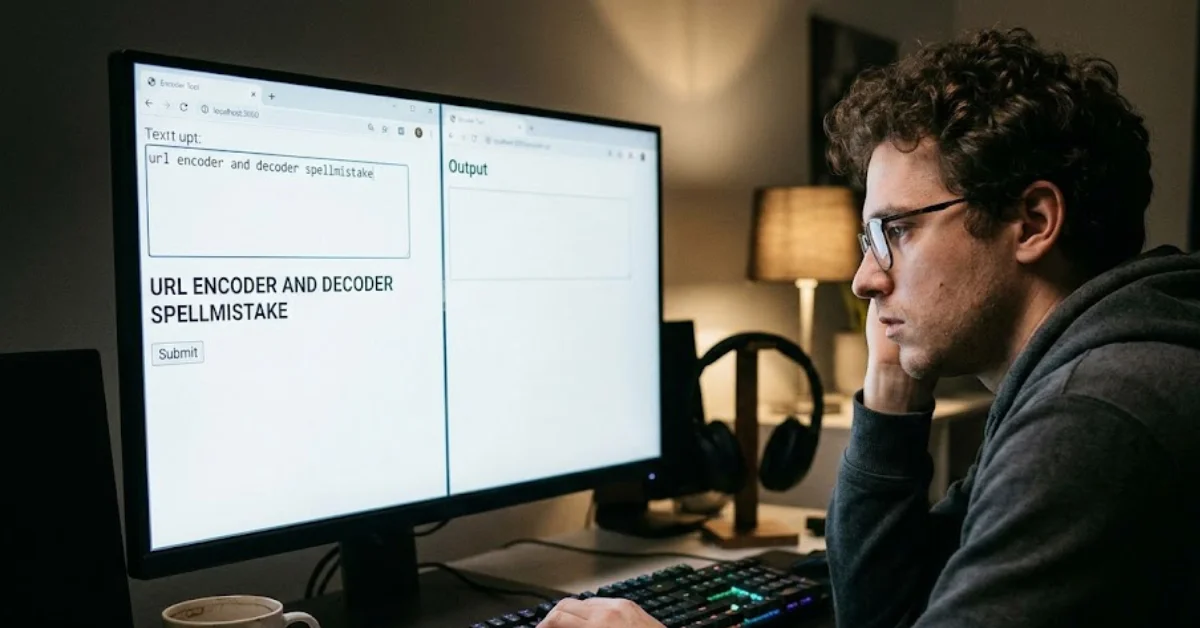

Many people search for URL Encoder and Decoder SpellMistake because they want to understand how URL encoding works or because they have found the SpellMistake tool while looking for a simple way to encode and decode URLs. Although the phrase may sound confusing at first, it simply refers to a URL encoding and decoding tool available on the SpellMistake website. The tool helps users convert normal text into a format that browsers and web servers can safely read, while also allowing encoded text to be changed back into its original form.
URL encoding is an important part of modern websites and web applications. Every time a website contains spaces, symbols, or special characters, these characters often need to be converted into a standard format before they are sent over the internet. A URL Encoder and Decoder SpellMistake tool makes this process quick, accurate, and beginner-friendly. Whether you are a student, blogger, SEO professional, marketer, or web developer, learning how URL encoding works can help you avoid broken links, improve website performance, and communicate correctly with online systems.
How URL Encoding and URL Decoding Work
URL encoding is the process of converting characters that are not safe to use in a web address into a format that browsers and servers can understand. For example, a space cannot normally appear inside a URL, so it is replaced with %20. Other special characters, such as @, #, &, and +, are also converted into unique codes. This ensures that the complete web address is transmitted correctly without confusing the browser or the server.
URL decoding is simply the reverse process. It changes encoded values back into normal, readable text. For example, Hello%20World becomes Hello World after decoding. This process is useful when reading encoded links, debugging websites, or checking API requests. Understanding both encoding and decoding helps users avoid common URL errors and makes working with websites much easier.
Quick Information Table
| Original Character | Encoded Value | Purpose |
|---|---|---|
| Space | %20 | Separates words safely |
| @ | %40 | Email addresses |
| & | %26 | Separates URL parameters |
| + | %2B | Mathematical or text symbol |
| # | %23 | Prevents fragment errors |
| ? | %3F | Query string separator |
Common URL Encoder and Decoder SpellMistake Errors
Many beginners believe that a URL encoder can correct spelling mistakes, but this is not its purpose. The tool only converts characters into a format that computers understand. If a word is already misspelled before encoding, it will remain misspelled after decoding. This is why checking your text before encoding is always a good habit. A spelling checker and a URL encoder perform two completely different jobs.
Another common mistake is double encoding. This happens when an already encoded URL is encoded again, creating incorrect values that may stop a webpage or API from working properly. People also make mistakes by manually replacing spaces or symbols without understanding URL standards. Learning these small details can save time and prevent frustrating technical problems.
Common Encoding Mistakes
- Encoding an already encoded URL
- Forgetting to encode special characters
- Confusing URL encoding with HTML encoding
- Expecting the tool to fix spelling errors
- Encoding the entire URL when only parameters need encoding
- Copying incomplete URLs
Case Study
A digital marketer was sharing campaign links that contained spaces and special symbols. Some visitors received error pages because the links were not properly encoded. After using a URL Encoder and Decoder SpellMistake tool, every special character was converted correctly, and the campaign links worked perfectly across different browsers and devices. This small correction improved user experience and prevented lost traffic.
How to Use a URL Encoder and Decoder SpellMistake Tool
Using a URL encoder and decoder is very simple, even for beginners. First, copy the text or URL that contains special characters. Paste it into the encoding box and choose the encode option. Within seconds, the tool converts the text into a URL-safe format. If you already have encoded text, simply paste it into the decoder section and select decode to return it to its original form.
Although the process is quick, users should always double-check the output before publishing a URL on a website or sending it through an API. Testing the encoded link helps confirm that every parameter works correctly. This simple habit reduces broken links, improves compatibility, and creates a better experience for visitors.
Simple Steps
- Copy your text or URL.
- Paste it into the tool.
- Select Encode or Decode.
- Copy the result.
- Test the final URL before using it.
Good URL encoding is not about making URLs look complicated. It is about making sure every browser and server reads them correctly.
Benefits of Using URL Encoder and Decoder SpellMistake Correctly
Using a URL Encoder and Decoder SpellMistake tool correctly helps websites communicate smoothly with browsers, servers, and APIs. Proper encoding protects special characters from being misinterpreted and reduces the chance of broken pages or failed requests. It also improves reliability when sharing URLs through emails, social media, online forms, or web applications.
Correct URL encoding also supports better technical performance. Developers spend less time fixing errors, marketers avoid broken campaign links, and website owners create a better experience for visitors. While URL encoding alone does not improve search rankings, it helps maintain clean and functional URLs that search engines can access without unnecessary issues.
Key Benefits
- Reduces URL errors
- Supports API communication
- Protects special characters
- Improves website compatibility
- Creates cleaner URLs
- Saves troubleshooting time
- Enhances user experience
- Prevents broken links
Frequently Asked Questions About URL Encoder and Decoder SpellMistake
What is URL Encoder and Decoder SpellMistake?
It is an online tool that converts normal text into URL-safe format and decodes encoded URLs back into readable text.
Can it fix spelling mistakes?
No. It only encodes and decodes characters. Spelling mistakes remain the same unless corrected manually.
Why do spaces become %20?
Spaces are not allowed directly inside URLs, so they are replaced with %20 to ensure browsers interpret them correctly.
Is URL encoding important?
Yes. It prevents errors caused by special characters and helps websites, browsers, and APIs communicate correctly.
Who should use this tool?
Anyone working with websites, SEO, APIs, programming, digital marketing, or online forms can benefit from using a URL encoder and decoder.
Final Thoughts
Understanding URL Encoder and Decoder SpellMistake is useful for anyone who works with websites or online content. While the concept may seem technical at first, it is actually very simple once you understand that encoding protects special characters and decoding restores them to their original form. These two processes make web communication more reliable and help prevent many common URL-related problems.
Whether you are a beginner learning about web technology or an experienced professional managing websites and APIs, using a URL encoder and decoder correctly can save time and reduce unnecessary errors. Remember that this type of tool does not correct spelling mistakes—it only converts text into a web-friendly format. By learning when and how to encode URLs, you can create cleaner links, improve compatibility, and ensure your web content works smoothly across different browsers and platforms.
Read more: Expert reviews TheLaptopAdviser