

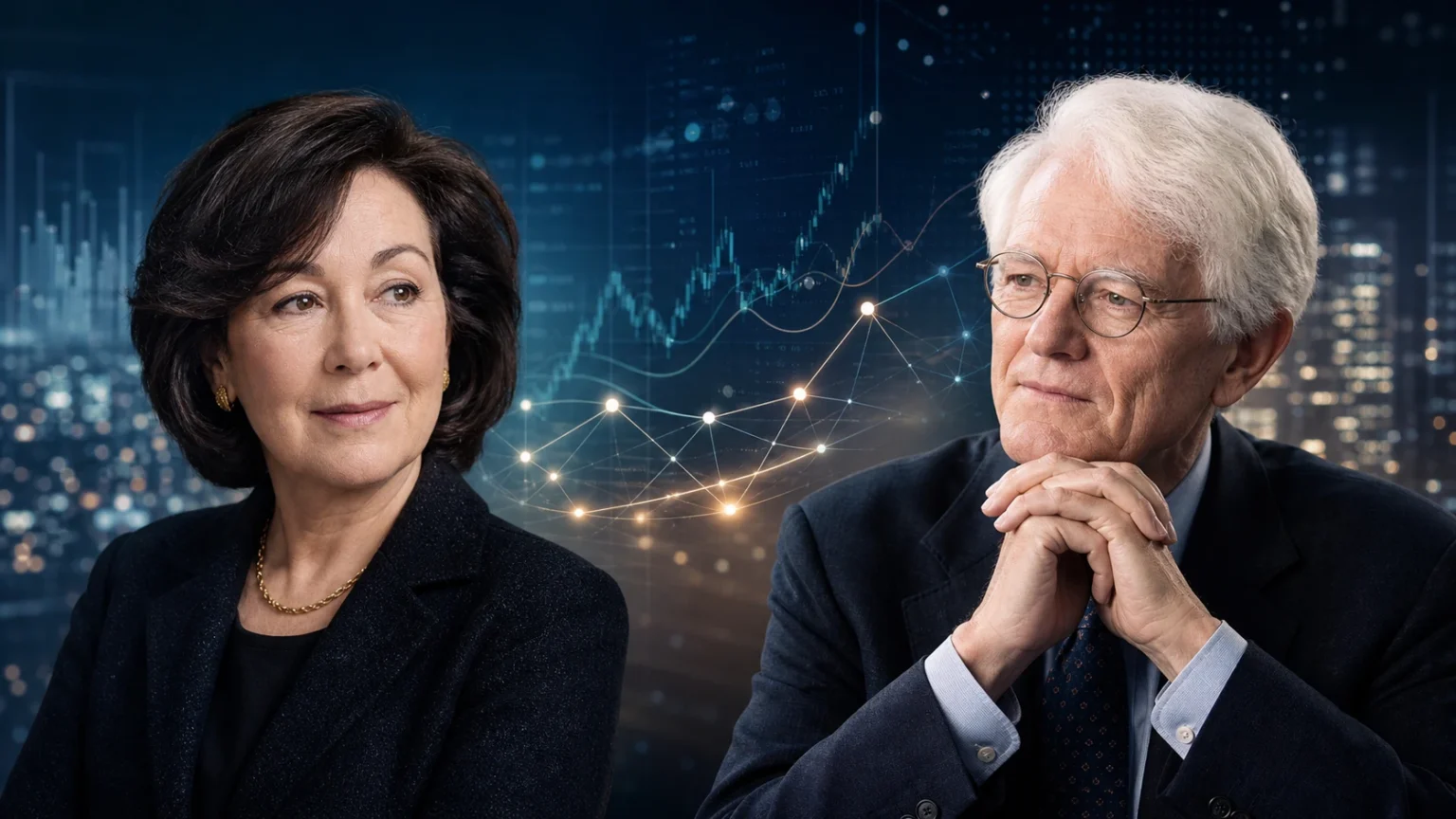

Safra Catz and Peter Lynch are two important names in the world of business and finance, although they became successful in very different ways. Safra Catz built her reputation as a powerful business executive and spent many years helping lead Oracle, one of the world’s largest technology companies. After serving as Oracle’s CEO, she became executive vice chair of its board in 2025. Peter Lynch, on the other hand, became famous as an investor. He is best known for managing Fidelity’s Magellan Fund from 1977 to 1990 and for showing ordinary investors that understanding a business can be more useful than simply following stock-market excitement.
What makes the Safra Catz and Peter Lynch comparison interesting is not that they followed the same career, but that both became known for making important financial decisions with discipline. Catz worked from inside a company, helping shape strategy, manage money, and support long-term business growth. Lynch looked at companies from the outside as an investor, trying to understand which businesses had strong products, healthy finances, and room to grow. Looking at their careers together gives readers a useful way to understand business leadership, investing, company growth, financial discipline, and long-term thinking from two very different points of view.
Who Are Safra Catz and Peter Lynch?
Safra Catz and Peter Lynch in Simple Terms
Safra Catz is a business executive best known for her long career at Oracle. Before joining Oracle, she worked in investment banking at Donaldson, Lufkin & Jenrette. She joined Oracle in 1999 and later held important positions including president and chief financial officer. Catz became Oracle’s CEO in 2014 and remained in that role until September 2025. She then moved into the position of executive vice chair of Oracle’s board, where she continues to help guide the company’s strategic direction. Her career is closely connected with corporate finance, business operations, acquisitions, technology, and long-term company growth.
Peter Lynch became famous in a very different part of finance. He is best known for managing Fidelity’s Magellan Fund from 1977 until 1990. During his time there, the fund became one of the most closely watched investment funds in America. Lynch became popular because he explained investing in language that ordinary people could understand. Instead of treating stocks like mysterious numbers moving on a screen, he encouraged investors to study the real company behind each stock. His books, including One Up on Wall Street, Beating the Street, and Learn to Earn, helped make his ideas understandable to millions of individual investors.
| Quick Information | Safra Catz | Peter Lynch |
|---|---|---|
| Main field | Business and technology leadership | Investing and fund management |
| Best known for | Leading Oracle | Managing the Magellan Fund |
| Major organization | Oracle | Fidelity |
| Main strength | Corporate finance and strategy | Finding and studying businesses |
| Famous period | Oracle CEO, 2014–2025 | Magellan manager, 1977–1990 |
| Key lesson | Strong execution matters | Understand what you own |
Are Safra Catz and Peter Lynch Connected?
What Is the Safra Catz and Peter Lynch Connection?
There is no established public record showing that Safra Catz and Peter Lynch worked together or built a business partnership. Their official career histories follow different paths. Catz built most of her public reputation inside Oracle, while Lynch built his through Fidelity and investment management. Public biographies also do not show a family relationship between the two. Their names make more sense together when they are viewed as two examples of financial thinking from opposite sides of a company: Catz as a person helping run a business and Lynch as a person deciding which businesses may be worth owning.
That difference actually makes the Safra Catz and Peter Lynch comparison useful. A company executive asks questions such as: How can we increase revenue? Where should we invest money? Which costs can be controlled? Should we buy another company? An investor asks different questions: Is this company financially healthy? Is management making good decisions? Can profits grow? Is the stock price reasonable? Catz spent much of her career answering the first group of questions. Lynch became famous for answering the second. Both approaches finally meet at the same place: the quality and long-term value of a business.
Safra Catz’s Career, Oracle Leadership, and Business Strategy
How Safra Catz Helped Shape Oracle
Safra Catz’s rise at Oracle happened over many years rather than through one sudden promotion. She joined the company in 1999, became president in 2004, served in financial leadership roles, and became CEO in September 2014. Oracle’s filings describe her experience in corporate finance, mergers, acquisitions, operations, and financial stewardship as important to the company’s strategy. This background matters because large technology companies do not grow only by creating new products. They also need to decide where to spend billions of dollars, which businesses to buy, how to control costs, and how to combine acquired companies without damaging the wider organization. Catz became closely associated with that financial and operational side of Oracle.
A useful case study is Oracle’s leadership change in 2025. Rather than completely leaving the company after more than a decade as CEO, Catz moved into the executive vice chair position while Clay Magouyrk and Mike Sicilia became CEOs. Oracle said she would continue helping oversee strategic direction. The change also came as Oracle was placing greater attention on cloud infrastructure and artificial intelligence. Catz described the moment as a time when Oracle’s technology and business were strong and said it was the right time to pass the CEO role to another generation of executives. This shows an important leadership lesson: good leadership is not only about taking control; it is also about knowing when and how to transfer responsibility.
Peter Lynch’s Investment Strategy and Career
How Peter Lynch Built His Investing Reputation
Peter Lynch took over the Fidelity Magellan Fund in 1977. Fidelity’s own historical data shows that the fund had about $20 million in assets when his period as manager began, while the next manager inherited about $14 billion in 1990. Lynch’s performance during those years made him one of the most famous fund managers of his generation, with widely reported annualized returns of around 29%. Yet the most useful part of his story is not simply the return number. It is the way he thought. Lynch tried to understand businesses, their products, growth opportunities, finances, competition, and valuation instead of depending entirely on predictions about where the whole stock market might move next.
His investing philosophy is often shortened to “invest in what you know,” but that phrase can easily be misunderstood. Lynch was not saying that someone should buy a restaurant stock simply because they like its food. Familiarity is only the beginning of research. After discovering a company, an investor still needs to understand its earnings, debt, growth rate, competition, expansion plans, and price. Lynch also reminded readers that “stocks are not lottery tickets.” Behind each share is a real business. A simple mini case study would be a shopper noticing that a new retail chain is always busy. That observation may create an investment idea, but research must come before buying.
Peter Lynch also became known for grouping businesses into six broad types:
- Slow growers: mature companies growing at a modest rate.
- Stalwarts: large, established businesses with steadier growth.
- Fast growers: smaller or expanding businesses with strong growth potential.
- Cyclicals: companies whose results can rise and fall with economic cycles.
- Turnarounds: troubled companies that may recover.
- Asset plays: businesses that may own valuable assets the market has not fully recognized.
Safra Catz vs Peter Lynch: Similarities and Differences
Safra Catz and Peter Lynch Approach Business From Different Sides
The biggest similarity between Safra Catz and Peter Lynch is their attention to the real business behind financial numbers. Catz’s responsibilities required an understanding of operations, finance, acquisitions, customers, and long-term strategy. Lynch’s method required investors to understand the same type of information before placing money into a stock. Neither approach works well when decisions are based only on excitement. A company can have an impressive story and still be poorly managed. A stock can have a famous name and still be too expensive. In both cases, careful analysis matters more than simply following what is popular.
The major difference is where they sit in the decision-making process. Catz has spent much of her career inside a company, where decisions can directly change the company’s future. Lynch studied companies from the investor’s side and decided whether their shares offered an attractive opportunity. An executive can change spending, hiring, pricing, acquisitions, or strategy. A public-market investor normally cannot control those decisions and must decide whether management’s choices are good enough to deserve investment capital. This is why studying both people together gives readers a broader picture of business: one side is about creating value, while the other is about recognizing value.
| Quick Comparison | Safra Catz | Peter Lynch |
| Main role | Corporate executive | Investor and fund manager |
| View of a company | From inside the business | From outside as an owner |
| Key decisions | Strategy, spending, operations, acquisitions | Buy, hold, research, or sell |
| Main focus | Building company value | Finding attractive investments |
| Shared quality | Financial discipline | Financial discipline |
| Long-term lesson | Execute well | Research well |
What Investors and Business Leaders Can Learn From Safra Catz and Peter Lynch
Practical Lessons From Safra Catz and Peter Lynch
One lesson from both careers is that understanding a business takes time. Numbers matter, but numbers need a story behind them. Revenue growth means little if a company must spend even faster to produce that growth. High profits may not be sustainable if customers are leaving. A popular product may not create a strong investment if the stock price already assumes many years of perfect growth. Business leaders can learn from Catz’s focus on operations and financial control, while investors can learn from Lynch’s insistence on researching the company behind the stock. In both cases, good decisions come from connecting financial figures with what is actually happening inside the business.
Another lesson is to separate long-term value from short-term excitement. Imagine an investor studying Oracle using ideas associated with Peter Lynch. The investor would not begin by asking whether Oracle’s share price will rise tomorrow. A better starting point would be understanding how Oracle makes money, how its cloud business is developing, whether customers continue using its products, how much the company spends to grow, how much debt it carries, and whether its market value makes sense compared with its future earnings power. The same thinking can be used for almost any business. The goal is not to copy Lynch’s old stock picks or Catz’s corporate decisions. It is to learn how disciplined people ask better questions before risking money.
Safra Catz and Peter Lynch FAQs
Who is Safra Catz?
Safra Catz is a longtime Oracle executive who served as CEO from 2014 to 2025 and now serves as executive vice chair.
Who is Peter Lynch?
Peter Lynch is an investor best known for managing Fidelity’s Magellan Fund from 1977 to 1990.
Are Safra Catz and Peter Lynch related?
No public record shows a family relationship.
Did they work together?
There is no established record showing that they worked together.
Why compare Safra Catz and Peter Lynch?
Both are known for disciplined financial thinking, careful business analysis, and focusing on long-term value rather than short-term excitement.
Conclusion: Understanding Safra Catz and Peter Lynch
Safra Catz and Peter Lynch became successful through very different careers. Catz became a major figure in technology leadership by helping manage and guide Oracle, while Lynch built his reputation by studying companies and deciding which stocks offered attractive opportunities. There is no need to pretend that their careers are directly connected to understand why the comparison is useful. Together, they show two important sides of finance: the work required to build a strong company and the research required to recognize one.
For readers, the lasting lesson is simple but powerful. Do not judge a business only by a famous name, a rising stock price, or an exciting story. Look deeper. Understand what the company sells, how it earns money, how management uses capital, what could help it grow, and what could go wrong. Safra Catz and Peter Lynch approached financial decisions from different positions, but both careers remind us that patient research, clear thinking, and disciplined decisions can matter far more than short-term market noise.
Read more: valentine rocky adlon