

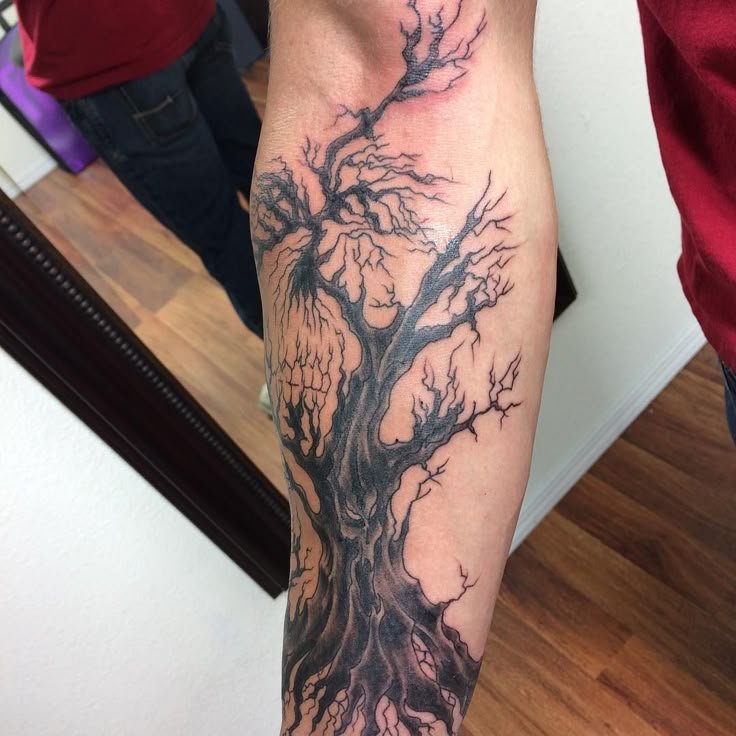

The poison tree tattoo meaning is mainly connected with hidden anger, resentment, emotional pain, revenge, and the harmful results of keeping negative feelings inside. It shows how a small painful feeling can grow into something much stronger when it is constantly fed by fear, silence, jealousy, or bitterness. The roots may represent where the pain began, while the twisted branches can show how the emotion spread into different parts of a person’s life. A poisonous fruit, especially an apple, can represent the final result of that growing anger, such as betrayal, revenge, broken trust, or an action that causes lasting damage.
A poison tree tattoo can carry both a negative and positive meaning, depending on the wearer’s personal story. It may warn against holding grudges, allowing anger to grow, or staying in a harmful relationship. At the same time, it can represent healing, emotional awareness, survival, and the decision to stop feeding painful thoughts. Someone who has escaped a toxic situation may choose this tattoo as a reminder of what they experienced and how much they have grown. Therefore, the tattoo is not automatically an evil sign or a bad omen; it is usually a deeply personal symbol showing that every emotion has consequences when it is either ignored or understood.
Origin of the Poison Tree Tattoo in William Blake’s Poem
The strongest meaning behind this tattoo comes from William Blake’s famous poem “A Poison Tree.” The poem explains how anger can develop when it is hidden instead of discussed. The speaker becomes angry with a friend but talks about the problem, so the anger ends. Later, the speaker becomes angry with an enemy and keeps the feeling inside. That secret anger is compared to a tree that is watered with fear, tears, fake smiles, and dishonest behavior until it produces a dangerous apple.
“I was angry with my foe: I told it not, my wrath did grow.”
The poisonous apple represents the harmful result of anger that has been allowed to grow. It may stand for revenge, betrayal, emotional manipulation, or a choice made while someone is deeply hurt. For tattoo lovers, the poem offers an important warning: feelings do not always disappear when they are ignored. A William Blake poison tree tattoo can therefore remind its wearer to face emotional problems honestly before they become more damaging.
Deep Symbolism Behind the Poison Tree Tattoo
A poison tree tattoo can represent suppressed anger, which means anger that is felt but never expressed in a healthy way. When people hide their frustration for a long time, it may slowly become resentment. That resentment can affect relationships, confidence, sleep, and daily peace. The tree’s roots can represent the original cause of the pain, while its growing trunk and branches may show how one painful experience influenced many other areas of life.
| Symbolic Theme | Possible Tattoo Meaning |
|---|---|
| Hidden anger | Feelings kept inside |
| Poisoned fruit | Harmful consequences |
| Deep roots | Old emotional wounds |
| Broken branches | Damaged relationships |
| New leaves | Recovery and healing |
| Thorns | Protection and boundaries |
The tattoo may also represent survival after betrayal, abuse, disappointment, or a toxic relationship. In this meaning, the wearer is not celebrating pain or revenge. Instead, the image becomes a reminder of what can happen when harmful emotions are allowed to control life. New leaves, flowers, sunlight, or healthy branches can be added to show recovery. This changes the poison tree from a symbol of destruction into a sign of self-awareness, stronger boundaries, and emotional growth.
Meaning of Different Poison Tree Tattoo Elements
Every visual element can change the overall poison tree tattoo symbolism. A bright red apple may represent temptation, revenge, danger, or a painful result that looks attractive from the outside. A rotten apple can show broken trust or the consequences of a bad choice. Exposed roots may symbolize childhood wounds, family problems, or painful memories that continue to influence the present. Leafless branches usually create a feeling of loneliness, emotional emptiness, or loss.
Animals and other dark details can add further meaning. A snake wrapped around the tree may symbolize temptation, hidden danger, transformation, or wisdom gained through suffering. A raven or crow can represent mystery, intelligence, grief, or change. Thorns often mean protection after being hurt, while a skull may represent death, endings, or the destruction caused by bitterness. A moon can add a sense of secrecy and inner reflection, while sunlight may suggest hope after a difficult period.
Popular Poison Tree Tattoo Designs and Styles
A minimalist poison tree tattoo normally uses thin lines, a small trunk, a few twisted branches, and perhaps one apple. This design is suitable for someone who wants a private symbol that does not immediately reveal its full meaning. Fine-line designs can look soft and artistic, while blackwork tattoos create a stronger and darker appearance. A simple tree silhouette may also be easier to place on the wrist, ankle, forearm, shoulder, or behind the ear.
Larger designs allow the artist to include more detail, such as roots, skulls, snakes, ravens, poisonous fruit, or lines from William Blake’s poem. A Gothic poison tree tattoo may use heavy shadows, sharp branches, storm clouds, and a dark forest background. Realistic tattoos can show damaged bark and decaying apples, while geometric designs combine natural branches with clean shapes. The best style is not simply the most attractive one; it should support the personal message the wearer wants the tattoo to communicate.
Poison Tree Tattoo Colors and Best Placements
Color plays an important part in the meaning of a poison tree design. Black and grey often represent grief, emotional darkness, mystery, or memories of a painful past. Red may suggest anger, danger, blood, passion, or revenge. Green can represent life and recovery, especially when new leaves grow from damaged branches. Purple may suggest mystery and inner strength, while blue can create a calmer message connected with sadness, reflection, or healing.
| Placement | Best Suited For |
| Forearm | Visible, medium-sized designs |
| Upper arm | Detailed circular compositions |
| Back | Large trees with wide branches |
| Chest | Deeply personal symbolism |
| Ribs | Private literary designs |
| Thigh | Large and detailed artwork |
| Wrist or ankle | Small minimalist tattoos |
Placement can also influence how the tattoo feels. A tree spreading across the back can appear powerful because the artist has enough space to show wide branches and deep roots. A chest tattoo may feel more emotional because it is placed close to the heart. Forearm designs are easier to see and can work as daily reminders, while rib or thigh tattoos are more private. Before selecting a location, the wearer should consider pain level, visibility, workplace rules, future changes to the body, and the amount of detail required.
Things to Know Before Getting a Poison Tree Tattoo
Before getting the tattoo, decide what the poison tree represents in your own life. It could stand for hidden anger, a broken friendship, a toxic relationship, personal mistakes, emotional survival, or a promise to communicate more honestly. Giving the design a clear meaning will help the tattoo artist choose the right branches, roots, fruit, colors, and surrounding details. It will also prevent the final artwork from feeling like a collection of random dark symbols.
For example, imagine someone who spent years in a friendship where their feelings were regularly ignored. Instead of speaking openly, they allowed resentment to grow until the friendship ended badly. They might choose a tree with damaged roots and one rotten apple to represent the past, but add a small green branch to show emotional recovery. This simple case shows how a poison tree tattoo can acknowledge painful behavior without allowing that behavior to define the person forever.
A tattoo is permanent, so it is important to choose a skilled artist whose style matches the design. Review the artist’s previous tree tattoos, fine-line work, shading, and healed results. Discuss the size carefully because very small roots, leaves, letters, and branches may lose clarity over time. Also follow proper aftercare instructions, including keeping the area clean, avoiding scratching, protecting it from strong sunlight, and allowing the skin enough time to heal.
Poison Tree Tattoo Versus Tree of Life Tattoo
A poison tree and a tree of life may look similar, but they usually communicate different ideas. The tree of life often represents balance, family, connection, wisdom, renewal, and the natural cycle of life. Its branches and roots are normally shown as healthy and connected. A poison tree usually carries a more difficult emotional message involving anger, secrecy, temptation, betrayal, or harmful consequences.
However, the two symbols can sometimes be combined. One side of the tree may appear dark, twisted, and damaged, while the other side grows green leaves or flowers. This design can represent a journey from bitterness to healing. It shows that the wearer understands their painful past but is no longer controlled by it. In this way, the poison tree becomes part of a larger story about responsibility, change, forgiveness, and personal growth.
Frequently Asked Questions About Poison Tree Tattoo Meaning
Is a poison tree tattoo evil?
No. It usually represents hidden anger, consequences, or healing.
Does it always mean revenge?
No. It can also symbolize survival and emotional growth.
What does the apple mean?
It represents temptation or the result of harmful feelings.
Can women and men wear it?
Yes. The symbol is not connected with one gender.
Is it linked to William Blake?
Often, yes. Many designs are inspired by his poem “A Poison Tree,” although wearers may also give the tattoo a personal meaning.
Conclusion
The poison tree tattoo meaning is deeply connected with anger, resentment, betrayal, emotional pain, and the consequences of feelings that remain hidden. Inspired by William Blake’s poem, the symbol shows how a small negative emotion can grow when it is fed by silence, fear, dishonesty, or revenge. Apples, roots, branches, thorns, snakes, and colors can all add another layer to its message.
At the same time, a poison tree tattoo does not have to represent darkness forever. It can become a symbol of healing, personal responsibility, and the courage to change. For many people, it serves as a reminder to speak honestly, release resentment, recognize toxic patterns, and protect their emotional peace. The most meaningful design is one that reflects the wearer’s real experience while showing the lesson or strength gained from it.
Read more: Connectivity HSSGamepad